For the coffee snobs, here is a remarkable book on the subject of the drink written in 1922. Topics include its history in different regions from the time, coffee preparation and techniques, chemistry, and industry information. Despite its age, much of the knowledge is still current.
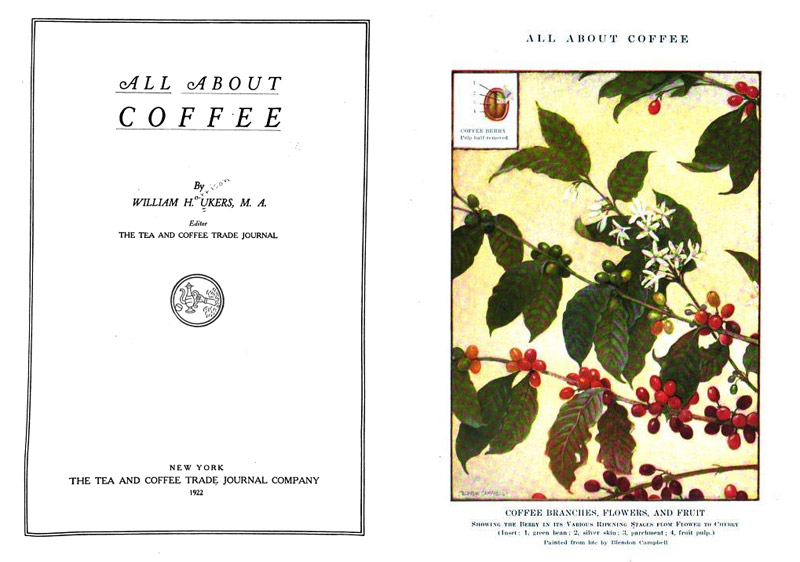
From the foreword:
Civilization in its onward march has produced only three important non-alcoholic beverages — the extract of the tea plant, the extract of the cocoa bean, and the extract of the coffee bean.
Leaves and beans — these are the vegetable sources of the world’s favorite nonalcoholic table-beverages. Of the two, the tea leaves lead in total amount consumed; the coffee beans are second; and the cocoa beans are a distant third, although advancing steadily. But in international commerce the coffee beans occupy a far more important position than either of the others, being imported into non-producing countries to twice the extent of the tea leaves. All three enjoy a world-wide consumption, although not to the same extent in every nation; but where either the coffee bean or the tea leaf has established itself in a given country, the other gets comparatively little attention, and usually has great difficulty in making any advance. The cocoa bean, on the other hand, has not risen to the position of popular favorite in any important consuming country, and so has not aroused the serious opposition of its two rivals.
Coffee is universal in its appeal. All nations do it homage. It has become recognized as a human necessity. It is no longer a luxury or an indulgence; it is a corollary of human energy and human efficiency. People love coffee because of its two-fold effect — the pleasurable sensation and the increased efficiency it produces.
Read more